General Culture
14 posts
- How To Be a Good Husband :
1) Be Pleasant: Nobody likes an arrogant man. Be pleasant to everyone around you including your wife, friends and family. Be warm, kind, positive, understanding and friendly. It is often heard said that ‘What we give is what we get back.’ Try to arrive home as cheery and lighthearted as you can even if you had a bad day at office or is physically exhausted after driving through the traffic jams. Just because your wife does not go out to work does not mean that her work is less strenuous. She might have been struggling with the children and the housework all day.
2) Respect the Vows: Faithfulness or Loyalty is one of the prime qualities a wife wants in her man. Have a sense of honor and duty.Remember that when you got married you took the sacred vows. The honorable thing is to fulfill the duty to your wife that you took upon yourself the day you got married. It is the duty of a man to provide for his family. Never expect your wife to contribute to the smooth operation of the household. Even in this day and age of women in the workplace, most prefer to have that as an option rather than a necessary part of their lives. Motherhood and caring for a husband and home usually takes priority for her. Never assume that the money you earn is yours to do with as you like. You have a family to think about now and their needs must always come before your own.
3) Reliable, Responsible and Supportive: Every Woman wants her partner to be reliable and be there for her when she needs her. Support your wife in all stages of life. Provide reassurance when she is feeling down. Do not belittle her or hurt her ego. If she is a working woman understand her work pressures and problems. Be proud of her on her accomplishments and do not forget to complement her. Be available for her when she needs a shoulder to cry or when she needs support from you. Let her know that you care for her. When you are not near her at least make a phone call to her even if you talk to her for only a minute or two. When you come back after work or on weekend do things with her or help her in whatever way possible. She would appreciate even if you are not much of help because you are tried to help her. Be a friend to her. When you don’t agree with her views respectfully let know that you don’t agree with reasons.
4) Adaptability and Sensitivity : As years pass on you'll see that glowing woman you fell in love with years ago does not look the same or behave in the same manner. She may be tied up with the pressures at home like needs of children, financial obligations etc. Allow her time to relax by taking some work off her shoulders or take some time out so that you can spend some time together relaxing. Be sensitive to the needs of your wife and looks to meet them. Do not let your feelings toward life's changes affect feelings toward your wife. An Ideal Man needs to be sensitive to the requirements of the partner, treat her as an equal, understand when she needs to stay late at work or help with housework and contribute to the expenses.
5)Show Respect: If you expect respect from others you need to treat others with respect too. Respect can be reflected in the way one talks and behaves. Always speak in a loving manner and refrain from speaking harshly. A good husband never chooses to belittle strike, humiliate or otherwise harm his wife in private or in public. It is better to watch what you say and to think your thoughts through before speaking as it is not possible to take back the words once they have been spoken. Treat her with respect in front of others and at home. Do not look at other ladies in front of her. Take in consideration her opinion when making important decisions of the family. If you are bringing your buddies home let her know in advance.
6) Judgment and Emotional Baggage: Many of us have emotional baggage. But do not bring that emotional baggage into the marriage. Many men praise their previous wives, girlfriends or mother in front of their wives. Avoid judging every action or opinion your wife has and understand that she is different from you. Her experiences and likings may be different from you too. Comparing her or making her feel that she does not measure up only would ruin your marriage.
7) Communication: Communication is the key to a good and solid marriage. Women also expect honesty in men. Honesty is what builds trust in your relationship with your woman. She may even forgive your mistakes but only if you are honest with her and promise not to do it again. Women like their men to be open to them at all times and not keep them in the dark about what is going on in their man’s life. Find time to sit and talk with your wife on a daily basis even if it is during the Dinner time. If you let things bottle up and feel that you cannot share with your wife then your marriage is in trouble. Be a good listener when she talks. Your wife too wants someone to listen to her and empathize with what's going on in her life. Listen avidly to your wife's complaints. Woman cannot resist a man who understands her moods, attitude, feelings, values, likes and dislikes. This would encourage her to open up with you and don’t keep secrets. Good Communication helps in building trust and strengthens your relationship. Make your woman laugh often. Women love men who are witty and have a sense of humor.Fights or problems may happen in between the two but do not let the world know about it rather solve it between yourselves. The fight you had last week over shopping or whatever is over and done with. So move on with it and stop rehashing old stuff and reminding her of her faults. Do not resort to name calling, hitting, spitting, breaking dishes or anything else when you lose your temper. . Love and Affection: Show your love and affection to her as often as possible. Every woman is a sucker of affection. If you only give them that stuff to get to bed, your wife is going to notice and think it's insincere. A good husband will appreciate his wife and will notice her, even after twenty or fifty years of marriage. She needs you to notice when she gets that new haircut or dresses up in something sexy for you to come home to. If you fail to notice what she is doing for you too many times, she may just count it as fruitless and quit. Gift your Partner something fancy when she least expects it. Surprise her by planning a trip, preparing a nice dinner, giving a bunch of her favorite flowers or taking her out for shopping. Every Woman likes to be pampered. Women, one way or the other, are nothing but over grown babies who constantly need care. But every woman has their likings, give things what she likes instead of forcing your likes on her and show her that you care and would be always there for her. Never forget the special days in her life. Make an effort to initiate spontaneous affection with your wife. Build the companionship by doing things together whether it is a common interest or hobby. Give her a hug or surprise kiss and tell her how much you love her. Hold hands with her when you’re out together. These small gestures show your wife that you’ve thought of her and help you reinforce your commitment to your wife.
9) Offer Protection: A woman need to feel safe and secured with her man. She needs to feel that when he is with her no one can harm her. You don't need to be a muscle man but at least when you are with her others should not be making a pass at her. She wants her man to behave like a man and treat her like a lady when she is with you.
10) Give her Space: As a Husband you need to understand that your wife has a life other than you also. She has her Parents, friends and colleagues who too are part of her life. She also may have some hobbies or passions he is involved in. Don’t expect her undivided attention. Don’t stop her if he wants to go out and hang out with her friends sometimes or engage in a hobby or want to spend some time with her parents.
11) Keep her happy in Bed: Sexual intimacy is one of the most essential things in any marriage. Good Sex helps tostrengthen your emotional and physical attraction to her. Please your wife in bed and be faithful to her. No woman would tolerate a cheating partner. Good sex plays a vital part when it comes to a satisfying relationship and if you are not skilled in bed that is going to be a major turn off. Never grumble about having to support children you didn't want to have. If you were irresponsible enough to help her get pregnant, then it is your duty to pay for that child.Do not bring porn into a relationship. Porn will only create unrealistic expectations in your mind about your spouse’s libido, body, and comfort level with weird sex positions.
In short, if you don't like how you partner treats you, take a minute to notice how you treat your partner and correct your behavior. If you are an ideal husband, that will help your wife to be an ideal wife. A wife usually responds to the way that she is treated. If she is treated like she is worthless, she will be worthless to you. But, if you treat her well, she will be a jewel in your crown, a pleasure to you and a forever blessing. - How To Be a Good Wife :
Whether you're a man looking for a good wife or a wife wanting to improve yourself, your marriage or your relationship - take a look at these 7 qualities of a good wife. Good fruit will come from these basic qualities anyone can develop.
7) Nag free. Ladies, a good wife is going to be nag free. Nagging is an ineffective method of trying to get your husband to perform a task you desire. Trust me ladies - it doesn't work and often will have the opposite of its intended affect.
6) Supportive. Are you supportive? What does it mean to be supportive? Do you belittle your man or do you help him to feel good about himself, his job, activities? Your husband will be much more respectful of you if you support him. Even when you don't agree with him - respectfully let him know you don't agree - then support him anyway. Otherwise, if he has difficulties - he'll feel as though you're adding to his troubles.
5) Build up your man. Ladies, there's no quicker way to build resentment in your man than to criticize him - especially in front of others. On the flip side - try genuinely complementing your husband in front of other people. Your husband will glow with admiration toward you and you'll feel his appreciation as love.
4) Keep him happy in the bedroom. Unfortunately, many women underestimate the importance of keeping her man's needs met. Often this comes from the basic differences in women and men. For men, sexual desire is much like physical hunger and if it's not fed properly - the relationship will struggle. Women must look to understand the needs of the man from his perspective not hers.
3) Respect. A good wife will try to treat her man with respect. How? Much of learning how to be respectful toward your husband has to do with the way you talk to him. The old phrase "It's not so much what you say but how you say it" should become a wife's motto. This doesn't mean you need to be careful what you say to your husband - just be respectful in the way you say it.
2) Communicate. Ironically, good communication between men and women can be quite frustrating. However, a good wife will seek to discover what's on her mind and find a way to express herself to her husband. Often, men and women will make a joint decision - while the man thinks she's in agreement with him - but only to discover later that she thought the decision was a bad idea.
1) Be pleasant. Work to be pleasant toward your husband. Don't be one of those people who makes everyone around you feel bad just because you've had a hard day. Good things will come from being pleasant. It's a decision - just decide to be pleasant. But if you can't be pleasant - make a decision not to bring him down with you. - : YOGA
Yoga (Sanskrit, Pāli: yóga) is a physical, mental, and spiritual discipline, originating in ancient India. The goal of yoga, or of the person practicing yoga, is the attainment of a state of perfect spiritual insight and tranquility. The word is associated with meditative practices in Hinduism, Jainism and Buddhism.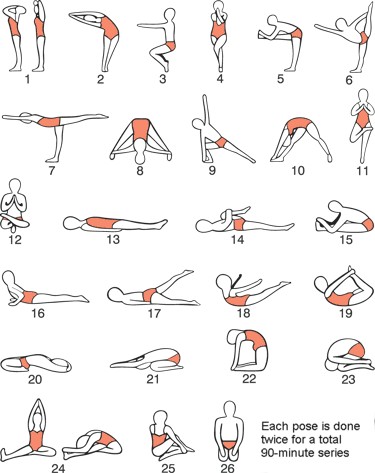
Within Hindu philosophy, the word yoga is used to refer to one of the six orthodox (āstika) schools of Hindu philosophy. Yoga in this sense is based on the Yoga Sutras of Patanjali, and is also known as Rāja Yoga to distinguish it from later schools. Patanjali's system is discussed and elaborated upon in many classical Hindu texts, and has also been influential in Buddhism and Jainism. The Bhagavad Gita introduces distinctions such as Jnana Yoga ("yoga based on knowledge") vs. Karma Yoga ("yoga based on action"). Other systems of philosophy introduced in Hinduism during the medieval period are bhakti yoga, and hatha yoga.
The Sanskrit word yoga has the literal meaning of "yoke", from a root yuj meaning to join, to unite, or to attach. As a term for a system of abstract meditation or mental abstraction it was introduced by Patañjali in the 2nd century BC. Someone who practices yoga or follows the yoga philosophy with a high level of commitment is called a yogi or yogini.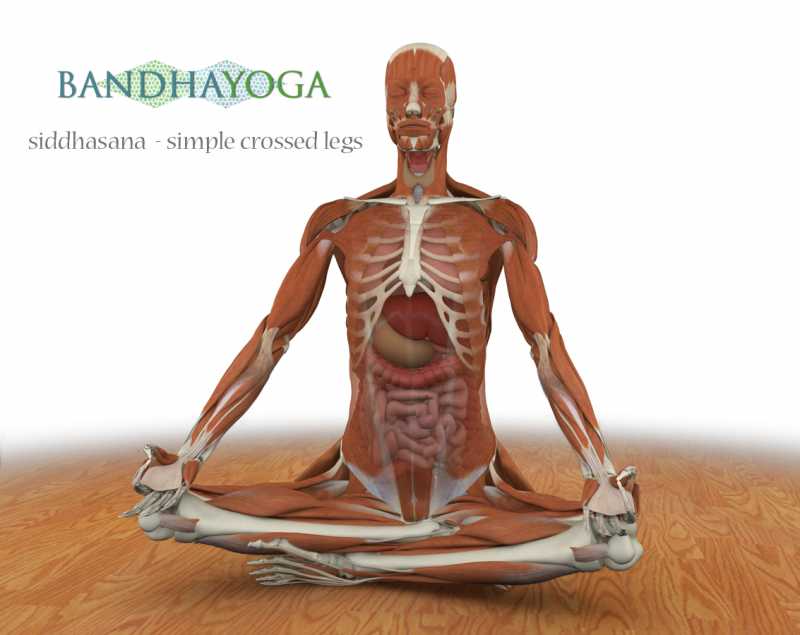
The goals of yoga are varied and range from improving health to achieving moksha. Within the Hindu monist schools of Advaita Vedanta, Shaivism and Jainism, the goal of yoga takes the form of moksha, which is liberation from all worldly suffering and the cycle of birth and death (samsara), at which point there is a realization of identity with the Supreme Brahman. In the Mahabharata, the goal of yoga is variously described as entering the world of Brahma, as Brahman, or as perceiving the Brahman or Ātman that pervades all things. For the bhakti schools of Vaishnavism, bhakti or service to Svayam Bhagavan itself may be the ultimate goal of the yoga process, where the goal is to enjoy an eternal relationship with Vishnu. - How to Be Happy :
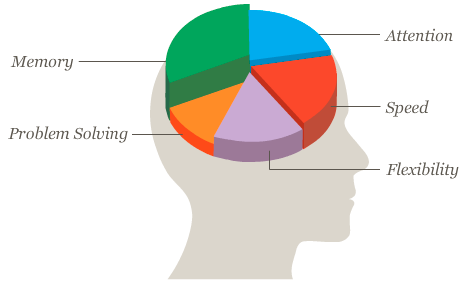
1. Notice What’s Right
Some of us see the glass as being half-full, while others see the glass as half-empty. The next time you are caught in traffic, begin thinking how nice it is to have a few moments to reflect on the day, focus on a problem you have been trying to solve, or brainstorm on your next big idea. The next time you get in the slow line at the grocery store, take the opportunity to pick up a tabloid magazine and do some “guilty pleasure” reading. Take all that life throws out you and reframe it with what’s right about the situation. At the end of the day, you will more content, at peace and happy. Take the time to begin to notice what’s right and see the world change in front of your eyes.
2. Be Grateful
How many times do you say the words “thank you,” in a day? How many times do you hear these same words? If you are doing the first thing, saying the “thank yous,” the latter will naturally happen. Learn to be grateful and you will be open to receive an abundance of joy and happiness.
3. Remember the Kid You Were
Do you remember how to play? I’m not referring to playing a round of golf or a set of tennis. I’m talking about playing like you did when you were a child – a game of tag; leap frog, or street baseball when the bat is a broken broom handle and the bases are the parked cars. One way to find or maintain your happiness is to remember the kid you were and play!
4. Be Kind
There is no question that by merely watching acts of kindness creates a significant elevation in our moods and increases the desire for us to perform good deeds as well. Kindness is indeed contagious and when we make a commitment to be kind to ourselves and to others we can experience new heights of joy, happiness and enthusiasm for our lives.
5. Spend Time with Your Friends
Although an abundant social and romantic life does not itself guarantee joy, it does have a huge impact on our happiness. Learn to spend time with your friends and make the friendships a priority in your life.
6. Savor Every Moment
To be in the moment is to live in the moment. Too often we are thinking ahead or looking ahead to the next event or circumstance in our lives, not appreciating the “here and now.” When we savor every moment, we are savoring the happiness in our lives.
7. Rest
There are times when we need the time to unwind, decompress, or to put it simply, just “to chill.” Life comes at all of us hard and fast. Time, as do the days on the calendar, keeps going forward at its own natural pace, which is not always the pace we would choose. Fatigue, stress and exhaustion may begin to settle in on us faster than we may think, or notice. The best remedy for this is indeed rest.
8. Move!
The expression a “runner’s high” does not infer an addiction, but a feeling or a state of mind – a state of euphoria. There is no question exercise, or any physical exertion, elevates your mood and enhances a more positive attitude as well as fosters better personal self-esteem and confidence. Indeed, one way to increase your happiness is to move!
9. Put on a Happy Face
Sometimes we have to fake it until we make it. I’m not suggesting that we not be honest, real or authentic, but I’m suggesting, sometimes, we just need to put on a happy face and keep moving forward. Researchers claim that smiling and looking like we are happy will indeed make us happier. Studies further show that if we act like we are happy then we can experience greater joy and happiness in our lives.
10. Pursue Your Goals
The absence of goals in our lives, or more specifically avoiding to pursue our goals, makes us feel like we are stuck and ineffective. The pursuit of goals in our personal lives, in our relationships, or with our careers, is the difference between having a mediocre life or a life full of passion and enthusiasm. pursue your goals and watch your happiness soar.
11. Finding Your Calling
Some find meaning in religion or spirituality while others find purpose in their work or relationships. Finding your calling may be much more than accomplishing one simple strategy for increasing your happiness, but having a sense of purpose – of feeling like you are here for a reason – can perhaps bring the greatest joy of all
12. Get into the Flow
Flow is the form of joy, excitement and happiness that occurs when we are so absorbed in an activity we love that we can loose ourselves and time seems to stand still. What creates flow is unique to each one of us. To find and sustain true happiness in our lives, we must get off the sidelines and get into the flow.
13. Play to Your Strengths
One way to achieve flow is by understanding and identifying our strengths and core values, and then begin to use these every day. Once we aware of our strengths and we begin to play to your strengths we can better incorporate them in all aspects of our lives.
14. Don’t Overdo It
Know when to say when. What gives you joy and happiness the first time may not work the second time. Too much of a good thing may begin not to feel as good if the “thing” becomes more of a routine, or an expectation. Set healthy and reasonable boundaries for yourself and don’t overdo it.
Source : 14 Timeless Ways to live a Happy life
Written by : Alex Blackwell - The Cause of Suffering :
As human beings, we all want to be happy. And one of the ways to be happy is to feel that everything is okay. The world is okay, and I am okay. But the trouble is, the world doesn’t seem to be okay, nor do we seem to be okay. Therefore, in order to be happy, most people live in some form of state of denial or escape.
This was not the teaching of the Eastern sages, at least on this level. They declared that this life is fundamentally suffering, and, therefore, if you want to be happy, you have to find another solution. Sometimes that solution was to get to heaven or to have a better birth.
But that’s in the future. We want to deal with our situation right now. And if we do, we have to try to understand one fundamental fact. Suffering could be said to have two aspects—one that we can’t do much about, and one that we can do something about. For example, if we have chest pains, those pains are suffering. But the real suffering is not the pain; the real suffering is worrying that we are having a heart attack. In other words, suffering is caused by our interpretation of our situation.
The same applies to almost everything around us. Suffering is caused by birth, death, sickness, old age and pain according to the philosophers, but the real suffering is caused by our attitude. If we see birth, death, sickness, old age and pain as natural phenomena, there is a minimum of suffering. If we have a different attitude, it can cause great suffering.
Fundamentally if we look at our inner self, we will discover that it is what we think about ourselves that determines how much suffering we’re undergoing. That frequently causes a state of anxiety; perhaps anger is always there, perhaps jealousy, perhaps greed, perhaps sadness. Something is there that is our real suffering and determines how we meet life. It is not the outer things that are the cause of our suffering, but how we react to them. What is left over when there is no outer stimulus is what is important.
The key to solving the problem is to recognise that these inner negative states, which seem to be at the core of our being, really are not at the core. There is something within us that is more fundamental, that is aware of all these states. It has the ability, not necessarily to get rid of these states, but to objectify them rather than identify with them.
Normally we do this by offering everything to God, by surrendering, by repeating God’s name or through introspection. The objective is to not tackle these things directly, but rather to identify with that which is aware of them. This is the purpose of all our spiritual practices. And the more we go to this deeper depth of ourselves, the less power these negative states will have over us.
So, we can say that life is fundamentally suffering, but at a deeper level it is all divine. And the scriptures tell us that not only is Divinity beyond all suffering, but that is what we are. So our solution is not so much at the physical and mental level as it is at the level of our identity: Believe the scriptures and the gurus when they tell us that we are That. Recognise that we are the witness of all these states, and allow the healing to take place. - How many pyramids of the world do you know ?

Of course at first you’ll know about the three great pyramids in Egypt and then mention some pyramids of Mexico.
But the locations of pyramids is not confined to these two countries. In 2006 five huge pyramids were found in Bosnia and Herzegovina. More than twenty pyramids have been found so far and those researched so far are in Italy, Spain, France, Croatia, Slovenia, Serbia and Greece.
The Asian-Pacific area is also an unexplored region.
Open minded scientists, researchers and amateurs from all over the world have spoken about the mysterious pyramids in China for the last ten years. In fact there are more than 300 pyramids in central China but they have never been excavated in detail.
Apart from the Chinese pyramids there are many pyramidal hills in the Philippines which are known as ‘Chocolate Hills’. The interest in prehistoric pyramids in Peru and Bolivia is growing amongst the world’s press and on the Internet. It is sure that time will show us new pyramid discoveries in every corner of the world
www.world-pyramids.com tells you about the new discoveries and explorations of the pyramids and ancient civilizations of this world!
We live in the world of pyramids where pyramids are the whole world!
http://www.youtube.com/watch?v=fl57kdOV5xw&feature=relmfu - Some Basic Weak Piont in the Human Body
I am very cautious when anyone tells me they have taken a self-defense class and now they know how to stay safe. Especially when they tell me they learned XYZ techniques to free themselves from an attacker.
However, when push comes to shove and your life or the lives of those you love are threatened, you need to know how to protect yourself. That is where I believe self-preservation comes into play.
This doesn’t always have to involve violence. Perhaps there’s a way you can outsmart your attacker. Perhaps you can talk him away or find a peaceful way to get out of the situation.
Reality is sometimes there isn’t another way. To protect yourself, there are some simple, easy-to-remember things you can do that don’t require a great deal of training. The basic premise is that no matter how strong you are, there are always going to be areas in your body that are weak.
Remember, we are working on how to get free of your attacker and run. Not how to put them down for the count or hold them until the authorities comes. Some of these attacks, while they seem simple enough can be quite deadly or permanent damage to your attacker, especially those attacks to the face region. By law statues in some areas, attacking to the point where you cause life-threating damage can make you leagally liable. So remember, this should only be a last resort option in your arsenal.
So let’s begin from the top and work our way down to some of the more obvious places you can attack:
1) The eyes -- I don’t care how strong you are. A good blow to the eyes will take any fighter out. Clawing, hitting, or even spitting into the eyes is a good way to stop your attacker. Most fighters, even well trained ones, rely on their eyes to attack.
2) The ears -- Ever get slapped really hard on the side of your head? I hope not. The region of the ear, which is so close to the brain, is another sensitive part of the body. It is also an orifice to the body and prone to being delicate.
3) The nose -- Another delicate membrane that when hit hard enough will bleed. At the very least, a strike to the nose will stun your attacker. If hit hard enough, it will cause the eyes to tear and blur vision. Followed by another strike to either the eyes or ears can cause what is known as “whiplash” and take your attacker down.
4) The throat -- It takes some skill to hit but if you ever hit someone in either the Adam’s apple region or the space between the rib cage and the throat, you’re liable to knock the wind out of them.
5) Under the arm -- Ok, this spot isn’t the easiest to get to but there’s an area right under the arm that I don’t care how much you workout, you will always be tender in that area. A good punch or blow to that spot can render your attacker without use of that arm and cause a great deal of pain.
6) The groin -- yes, one of my favorite spots to attack. Even before I learned any basic techniques, it was my habit to raise my knee and protect myself. That simple move places me just in the right spot for a knee strike to the groin.
7) Instep -- A good stomp down to the instep of your opponents foot is likely to cause a lot of pain. This spot isn’t always easy to hit but if the attacker comes to you from behind and grabs you, you’ve got a pretty good view of it. Toes -- And if you miss the instep, follow-up with another stomp to the toes. Unless your attacker has a high tolerance for pain or is wearing steel-toe shoes, getting your toes stomped on is no fun deal.
One thing to consider and what the various self-defense classes ARE good for, is to find out what is comfortable for you. What feels natural? What is your body’s first reaction to danger? Do you do like me and raise your knees? Do you immediately ball your hands into fists ready to attack? Taking some time to figure out what is your instinctual reaction to threat will help you figure out what your best defense will be. Each of us is unique as is each situation and you may find different types of attacks from above work best for you.
Overall, the best defense is to never get yourself into this situation in the first place. But if you find yourself in a dangerous spot, take a moment to realize the difference between things you must do to save yourself from bodily harm and possessions that can be replaced. And if you’re forced into confrontation, you don’t need anything fancy. Just go for the weak parts of the body and get out of there as quickly as you can. - With Respect,
Good post Dr. Javidan, the path to mastery is a long road and it encompasses many opticles. But when it comes to self protection, two phrases come to my mind. 1) The balance between victory and defeat often hangs on simple matters.
2)Whatever the attitude so is the response.
To'A - Vegatarian Lifestyle
Vegetarians are people who avoid all meat, meaning red meat, seafood and poultry. They do this for a variety of reasons such as being humane to animals and for other ethical reasons, but most vegetarians avoid these foods because the alternatives, which are mostly herbs, veggies and fruits, have more vegetarian health benefits. Vegetarian diets can just be as enjoyable as foods with meat despite popular belief.
Healthy Heart :
The greatest of the vegetarian health benefits is reduced risk of heart attacks. This is because vegetarians usually have lower cholesterol levels. Cholesterol levels are greatly increased by meat, especially red meat. Vegetarian diets are also low in saturated fats that are common in meat. Vegetables contain plant proteins, which are lower in cholesterol compared to animal proteins. Cholesterol and saturated fats are the major causes of heart disease, especially in those in their sunset years. This is because they clog the inside of the blood vessels over time. This leads to heart attacks, strokes and other cardiovascular diseases. Fruit and vegetable specifically have vegetarian health benefits by reducing the risk of getting ischemic heart disease, myocardial infarction and angina which are common in older people. This is because fruits and vegetables contain folic acid, carotenoids, dietary fiber, potassium, flavonoids, magnesium, phytosterols, and other polyphenolic antioxidants that have vegetarian health benefits.
Lowering cholesterol naturally Eliminate credit card debt Lead Generation :
Vegetarian diets rich in soluble fiber such as the ones found in oats, squash, carrots, dry beans and apples lowering serum cholesterol levels that might have been accumulated over the years, therefore adding people more years among other vegetarian health benefits. Fruits, nuts, whole grain and vegetables have flavonoids that have some biological properties and other vegetarian health benefits that are responsible for reducing the risk of cardiovascular disease in that they are antioxidants and so they protect LDL cholesterol from undergoing oxidation, effectively inhibiting formation of blood clots in the arteries and other blood vessels. The flavonoids also have a hypolipidemic effects and an anti-inflammatory effect – these are good for the health of the heart. Lower Blood Pressure
Another of the vegetarian health benefits is that vegetarians have lower blood pressure compared to those who eat meat, especially red meant. This is because vegetarian diets are low in salt – salt has been identified as the main cause of high blood pressure and hypertension. High blood pressure also occurs when blood tries to flow faster because of obstructed blood vessels. The obstruction is usually caused by cholesterol ingested from eating meat. Lower blood pressure is also maintained by the potassium which is found in fruits and vegetables such as apricots, papaya, bananas, cantaloupe, strawberries, eggplant, avocado, oranges, tomatoes, cucumber, cabbage, cauliflower, bell pepper, squash, turmeric, broccoli, parsley, spinach and lima beans among others. Control of Diabetes
Although diabetes does not have a cure yet, eating a vegetarian diet that is high in fiber and complex carbohydrates found in plant foods controls diabetes and has other vegetarian health benefits. Most doctors agree with this fact and advise their patients to consume legumes, vegetables, fruits and whole grains for controlling diabetes. These also have lower blood sugar and they completely eliminate the need for meds in some cases.
Prevention of Cancer :
Another of the vegetarian health benefits is that it vegetarian diets help in the prevention of some cancers which is very important because many cancers have no cure or very difficulte to cure. Many cancers, especially epithelial cancers, can be prevented with regular consumption of fruits and vegetables. Foods such as cruciferous vegetables, herbs and fruits have cancer-protective phytochemicals such as flavonoids, carotenoids, ellagic acid, sulfide compounds, isoflavones, isothiocyanates glucarates, phenolic acids, phthalides, phytosterols, saponins and terpenoids among others.
Elimination of Toxins from the Body :
Meat usually has a lot of toxins. Fruits and vegetables do not have preservatives as is the case with most packaged and/or processed foods. Vegetarians usually ingest organic foods that are grown without the chemicals responsible for toxin build-up in our bodies such as pesticides. Toxins cause skin problems, allergies, influenza, and a host of other ailments. In severe cases, they have been known to cause cancer and other serious medical conditions such as infertility.
Easier Digestion of Food :
It is a fact that human beings have a challenging time digesting meat and fish. These are ‘heavy’ foods that take a lot of time and energy to digest. People who eat such foods eventually experience weakening of their digestive systems which brings such problems as inability to eliminate waste rapidly. This means their bodies have a hard time doing ‘self-cleaning’ and this leads to problems such as stomach and intestinal cancer. On the other hand, foods such as fruits and vegetables are easily and rapidly digested and other vegetarian foods that are rich in fiber have vegetarian health benefits in that they actually aid in digestion.
Improvement of Overall Health :
Vegetarians enjoy many health benefits and they are less likely to be obese, their skins and other excretion systems work better and they have fewer toxins in their body. Although these vegetarian health benefits might not prevent diseases directly, it is easier for vegetarians to live longer and to have less sick days. - Patrizia Weiglein says
Yalda tradition :
Yalda , Shab-e Yalda , "Night of Birth", or Zayeshmehr "Birth of Mithra", or Shab-e Chelleh ; "Night of Forty") is the Persian winter solstice celebration which has been popular since ancient times.
Yalda is celebrated on or around December 20 or 21 each year.
Yalda has a history as long as the religion of Mithraism. The Mithraists believed that this night is the night of the birth of Mithra, Persian angel of light and truth. At the morning of the longest night of the year the Mithra was born.
In Zoroastrian and ancient Iranian traditions, the winter solstice with the longest night of the year was an auspicious day, and included customs intended to protect people from misfortune. On that day, people were advised to stay awake most of the night. To commemorate, people have small parties and gatherings and eat the last remaining fresh fruits from summer.
The Cult of the Mithra was first introduced to Iran thousands of years ago by migrant Aryans. Mithra, the Sun God remained a potent symbol of worship throughout the following centuries. Centuries later, during the Achaemenid era, Mithra became a principal deity, equal in rank to Ahura Mazda (the god of all goodness) and Anahita (goddess of water and fertility)
Over the centuries Mithraism spread to Greece and Ancient Rome via Asia Minor, gaining popularity within the ranks of the Roman army. In the 4th century AD as a result of errors made in calculating leap years and dates, the birthday of Mithra was transferred to 25 December
It was said that Mithra was born out of the light that came from within the Alborz mountains . Ancient Iranians would gather in caves along the mountain range throughout the night to witness this miracle together at dawn. They were known as 'Yar-e Ghar' (Cave Mates). In Iran today, despite of the advent of Islam and Muslim rituals, Shab-e Yalda is still celebrated widely.
It is a time when friends and family gather together to eat, drink and read poetry (especially Hafez) until well after midnight. Fruits and nuts are eaten and pomegranates and watermelons are particularly significant. The red color in these fruits symbolizes the crimson hues of dawn and glow of life, invoking the splendor of Mithra.
Because Shab-e Yalda is the longest and darkest night, it has come to symbolize many things in Persian poetry; separation from a loved one, loneliness and waiting. After Shab-e Yalda a transformation takes place - the waiting is over, light shines and goodness prevails.
source: Wikipedia.
special thanks to PatriziaEdited: 20 December 2012
- The Olympic Games
The first Modern Olympic Games were in Athens, Greece in 1896 and were organised by Baron de Coubertin. However, the Olympics have an even longer history, with the first ever Olympic games being held in 776 BC in Ancient Greece! Back then the Olympic Spirit was 'It is more important to take part than to win !
Because the Olympics are such a big event, with so many spectators across the world, they have been used as a stage for many protests, mainly political in nature :
1936 - Berlin
At this time Hitler was the German leader and he wanted the games to prove that white northern europeans were superior. A black athlete called Jesse Owens won four gold medals and Hitler stormed out of the stadium!
1972 - Munich
Nine israeli athletes were kidnapped by some Palestinians . All of the hostages were killed, along with five of Palestinians and a policeman after the rescue attempt went wrong !
1980 - Moscow
These games were boycotted by a lot of countries (including the USA) to protest about the soviet invasion of Afghanistan !
1984 - Los Angeles
The USSR boycotted these games because the USA had boycotted the Moscow games. This was referred to as tit-for-tat. These games were also highly commercialised as many international corporations sponsored the games which for the first time in history made a huge profit !
1992 - Barcelona
South Africa were allowed to enter a team for the first time since 1964 when they were banned because of the apartheid regime !
2008 - Beijing
There were protests during the torch relay in the run up to the games over Chinas human rights record
Hosting the Olympic games should bring more advantages than disadvantages :
Advantages :
•Prestige from hosting the games attracts trade and tourism
•The facilities which are built for use during the games can be used for the cities population for years to come
•Businesses in the city see a massive increase in trade during the games (like hotels and restaurants etc)
•The organisers can try to make a profit out of the games
Disadvantages :
•It is getting really expensive to host the games and more difficult to make any profit from it
•Any problems could mean the organisers lose money rather than make it
•Security must be a top priority to prevent terrorism and hooligans disrupting the games
•A cities infrastructure (transport and communication system) must be excellent to cope with the influx of visitors - Spiritual Warrior
The Spiritual Warrior is a person who challenges the dreams of fear, lies, false beliefs, and judgments that create suffering and unhappiness in his or her life. It is a war that takes place in the heart and mind of a man or woman. The quest of the Spiritual Warrior is the same as spiritual seekers around the world. The Spiritual Warrior faces this challenge with the clarity and awareness that this war is fought within himself and that Truth and unconditional love are on the other side of these battles.
Characteristics and Traits :
To win the war against fear requires awareness, courage, discipline, and commitment to transform the emotional body. These are some of the characteristics of a Warrior
1. Awareness of the Spiritual Warrior
The first and most vital tool of the spiritual warrior is awareness. It is easy to we think we are aware, but pure awareness has no thinking involved. It has no thinking because it has no interpretation. Awareness is to perceive with clarity the truth of what is happening without interpretation or opinion. In a moment of awareness the dialogue in the mind stops. We are “seeing” from a point or view separate from the reasoning part of our mind. This could be described as an epiphany. Practiced seer’s live in this awareness in every moment.
Awareness is essential because it is the state of consciousness that allows us to discern between the facts and the Truth, and between the story and the lies in our mind. The realm of our mind is filled with false perceptions and false beliefs. While the mind can be very clever with stories and lies, it is the consciousness of awareness that is the discerning intelligence. We may use very intelligent reasoning to make a decision that is not good for ourselves. Only to look at it in hindsight and realize that we discounted indicators that told us otherwise. This can be done in something as simple as a stock investment. The mind is clever, but it is also full of assumptions and limited paradigms of perception. Conscious awareness allows us to see clearly instead of be blinded by these false belief paradigms.
Self awareness is the clarity to know who and what you are, and not get caught up in self important images of ourselves. These self important images in our mind distort our sense of who we are. False images can lead us to low self esteem and self confidence, or they can take us into being self centered. If you have an idea of who you are, then consider that you are not that idea in your mind. You are the one creating the idea, and observing it. Self awareness that you are not any of those images in your mind is essential to becoming free of self importance.
2. Courage of the Spiritual Warrior
The courage that makes for a good soldier also makes for a good Spiritual Warrior, but the intent becomes completely different. A soldier has courage to face a challenge that may bring physical harm. The Spiritual warrior has the courage to question challenge his or her own beliefs. By challenging our own beliefs we can dissolve the lies that cause our suffering. To challenge our own beliefs requires courage because it means the end of our illusion of safety. When other people challenge our own beliefs we are usually quick to defend. We defend them even if they cause us to suffer. As a warrior we learn not to defend what we believe, and then to challenge those very beliefs ourselves. In this way we are able to sort out the truth from illusions.
3. Discipline of the Spiritual Warrior
A soldier has discipline to follow orders and continues on when faced with challenges. The Spiritual Warrior’s discipline to continue on with their path when faced with challenges from their mind. It is easier to follow orders as a soldier, because we are threatened with consequences and rewarded to motivate us. This is in line with our years of conditioning. A warrior must have the discipline to practice deal with their own mind without someone else providing the motivation with carrots or sticks. A warrior must exercise their own will at the command of their heart, not an outside authority figure. This often means going against the fearful opinions in our mind that tempt us with illusions of punishment and rewards. We must also have the discipline to follow our own heart even when tempted by another person’s opinion. This way of living requires disciplined practice.
4. The Love of the Spiritual Warrior
The Spiritual warrior must have the commitment to love him/her self. The warrior then extends that love to humanity. The commitment is required because in our journey we will certainly fumble and fall many times. It is in having a strong commitment that we get back up again. It is common to fall to judgment. It can be easy to love some people, particularly the people that like us or treat us well. However, it requires a tremendous commitment to love in the face of those that reject us. This commitment will cause us to challenge our beliefs about our judgments and not being compassionate. We must be committed to love beyond our own self-serving interests of what it will bring us. This is how we will become happy beyond our current paradigm of beliefs. In time we become committed to love for the sheer enjoyment of expressing love. This becomes our commitment. We nourish ourselves with the love we express. A warrior acts in this committed way, even when challenged.Edited: 13 January 2013
- Cyrus the Great and his Cylinder
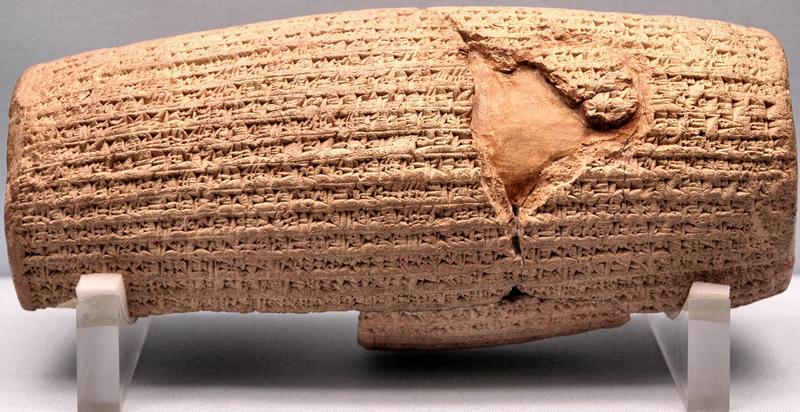
The size of Cyrus Cylinder is 23 cm long, 11 cm wide with 40+ lines of writing (although broken) and it is dated 539 BCE.
Transliteration
(Rogers 1912: 380-84) Translation
(Adapted from Rogers 1912: 380-84)
1 [. . . . . . . . . . . . . . . . . . . . . . . . . .]-ni-Šu [. . . . . . . . . . . . . . . . . . . . . . .] his troops
2 [. . . . . . . . . . . . . . . . . . . . . . . .]-ki-ib-ra-tim [. . . . . . . . . . . . four] quarters of the world
3 [. . .]-ka gal ma tu-û i Š -Šak-na a-na e-nu-tu ma-ti- Šu [. . .] a weakling was established as ruler over his land
4 Ši-[. . . . . . . . . . ta-am]-Ši-li ú- Ša-aŠ-ki-na si-ru-Š u-un and [. . . . .] a similar one he appointed over them,
5 ta-am-Ši-li É-sag-ila i-te-[. . . . . . -ti]m a-na Uriki ù si-it-ta-tim ma-ha-za like Esagila he made [. . .] to Ur and the rest of the cities,
6 pa-ra-as la si-ma-a-ti- Šu-nu ta-[. . . . . l]i û-mi- Šá-am-ma id-di-ni-ib-bu-ub ù ana na-ak-ri-tim a command dishonouring them [. . . . .] he planned daily and in enmity,
7 sat-tuk-ku ù-Šab-ti-li ú-ad-[di . . . . . . iŠ] -tak-ka-an ki-rib ma-ha-zi pa-la-ha iluMarduk Šar ilâni [Šá]-qi- Še a-Šu-uŠ- Šu he caused the daily offering to cease; he appointed [. . .] he established within the city. The worship of Marduk, king of the gods [ . . . ]
8 li-mu-ut-ti ali-Šu [i-te]-ni-ip-pu-uŠ û-mi- Šá-am-ma na-[. . . . niŠe ] i-na ab-Ša-a-ni la ta-ap-Š ú-úh -tim ú-hal-li-iq kul-lat-si-in he showed hostility toward his city daily
[. . .] his people; he brought all of them to ruin through servitude without rest.
9 a-na ta-zi-im-ti-Ši-na iluEllil lililani iz-zi-iŠ i-gu-ug-ma [. . .] ki-su-úr-Šú-un ilâni a- Ši-ib lib-bi-Š ú-nu i-zi-bu ad-ma-an- Šú-un On account of their complaints, the lords of the gods became furiously angry and left their land; the gods, who dwelt among them, left their homes,
10 i-na ug-ga-ti Šá ú- Še-ri-bi a-na ki-rib Babili ilu Marduk ti-[. . . .] li-sa-ah-ra a-na nap-har da-ád-mi Šá in-na-du-ú Šú-bat-su-un in anger over his bringing into Babylon. Marduk [. . .] to all the dwelling places, which had become ruins,
11 ù niŠe mât Šú-me-ri ù Ak-ka-dikiŠ a i-mu-ú Ša-lam-ta-aŠ ú-sa-ah-hi-ir ka- [. . . .]- Ši ir-ta-Š i ta-a-a-ra kul-lat ma-ta-a-ta ka-li- Ši-na i-h i-it ib-ri-e-Šu and the people of Sumer and Akkad, who were like corpses [. . . .] he turned and granted mercy. In all lands everywhere
12 iŠ-te-'-e-ma ma-al-ki i- Ša-ru bi-bil lib-bi Šá it-ta-ma-a h qa-tu-uŠ-Šú m Ku-ra-aŠŠar ali An- Šá-an it-ta-bi ni-bi-it-su a-na ma-li-ku-tim kul-la-ta nap- h ar iz-zak-ra Šú-[ma- Š u] he searched; he looked through them and sought a righteous prince after his own heart, whom he took by the hand. He called Cyrus, king of Anshan, by name; he appointed him to lordship over the whole world.
13 mâtQu-ti-i gi-mir Um-man Man-da ú-ka-an-ni- Ša a-na Š e-pi-Šu ni Še sal-mat qaqqaduduŠa ú- Š á-ak-Ši-du ka-ta-a-Šu The land of Qutu, all the Umman-manda, he cast down at his feet. The black-headed people, whom he gave his hands to conquer,
14 i-na ki-it-tim ú mi-Š a-ru iŠ-te-ni-'e-Ši-na-a-tim iluMarduk belu rabu ta-ru-ú niŠ e- Šu ip-Še-e-ti Šá dam-qa-a-ta ù lib-ba-Šú i-Šá-ra ha-di-i Š ip-pa-al-li-is he took them in justice and righteousness. Marduk, the great lord, looked joyously on the caring for his people, on his pious works and his righteous heart.
15 a-na ali-Šú Bab-ilani ki a-la-ak-Šú ik-bi ú- Š a-as-bi-it-su-ma har-ra-nu Babili ki-ma ib-ri ú tap-pi-e it-tal-la-ka i-da-a-Šu To his city, Babylon, he caused him to go; he made him take the road to Babylon, going as a friend and companion at his side.
16 um-ma-ni-Šu rap- Ša-a-tim Šá ki-ma me-e nari la ú-ta-ad-du-ú ni-ba-Šú-un kakke-Š ú-nu sa-an-du-ma i-Šá-ad-di- ha i-da-a- Šú His numerous troops, in unknown numbers, like the waters of a river, marched armed at his side.
17 ba-lu qab-li ù ta-ha-zi ú- Še-ri-ba-aŠ ki-rib Babili ala- Šú Bab-ilaniki i-ti-ir i-na Š ap-Šá-ki m, iluNabu-na'id Šarru la pa-li-hi-Š ú ú-ma-al-la-a qa-tu-u Š- Šu Without battle and conflict, he permitted him to enter Babylon. He spared his city, Babylon, a calamity. Nabonidus, the king, who did not fear him, he delivered into his hand.
18 niŠe Babili ka-li- Šú-nu nap-har mâtŠ ú-me-ri u Ak-ka-diki ru-bi-e ù Š ak-ka-nak-ka Šá-pal-Š ú ik-mi-sa ú-na-aŠ -Š i-qu Še-pu-u Š- Šú ih-du-ú a-na Š arru-ú-ti- Šú im-mi-ru pa-nu-uŠ - Šú-un All the people of Babylon, Sumer, and Akkad, princes and governors, fell down before him and kissed his feet. They rejoiced in his sovereignty; their faces shone.
19 be-lu Šá i-na tu-kul-ti- Šá ú-bal-li-tu mi-tu-ta-an i-na bu-ta-qu ú pa-ki-e ig-mi-lu kul-la-ta-an ta-bi-iŠ ik-ta-ar-ra-bu- Šu iŠ-tam-ma-ru zi-ki-ir-Š ú The lord, who by his power brings the dead to life, who amid destruction and injury had protected them, they joyously blessed him, honoring his name.
20 a-na-ku mKu-ra-aŠ Šar kiŠ-Š at Šarru rabu Šarru dan-nu Š ar Babili Šar mât Š ú-me-ri ú Ak-ka-di Šar kib-ra-a-ti ir-bit-tim I am Cyrus, king of the world, the great king, the powerful king, king of Babylon, king of Sumer and Akkad, king of the four quarters of the world,
21 mar mKa-am-bu-zi-ia Šarru rabu Šar alu An-Š á-an mar mari mKu-ra-aŠ Šarru rabu Šar alu An-Š á-an ŠA.BAL.BAL m Š i-iŠ-pi-iŠ Š arru rabu Šar alu An-Š a-an son of Cambyses, the great king, king of the city of Anshan, grandson of Cyrus, the great king, king of the city of Anshan; great-grandson of Teispes, the great king, king of the city of Anshan;
22 ziru da-ru-ú Ša Šarru-ú-tu Ša iluBel u ilu Nabu ir-a-mu pa-la-a-Š ú a-na tu-ub lib-bi- Šú-nu i h-Ši-ha Šarru-ut-su e-nu-ma a-na ki-rib Babili e-ru-bu sa-li-mi-i Š eternal seed of royalty whose rule Bel and Nabu love, in whose administration they rejoice in their heart. When I made my triumphal entrance into Babylon,
23 i-na ul-si ù ri- Š á-a-tim i-na ekal ma-al-ki ar-ma-a Š ú-bat be-lu-tim iluMarduk belu rabu lib-bi ri-it-pa- Š ú Šá mare Babili ú . . . an-ni-ma û-mi- Šam a-Š e-'-a pa-la-ah- Šú I took up my lordly residence in the royal palace with joy and rejoicing; Marduk, the great lord, moved the noble heart of the residents of Babylon to me, while I gave daily attention to his worship.
24 um-ma-ni-ia rap-Ša-tim i-na ki-rib Babili i-Šá-ad-di-ha Šú-ul-ma-niŠ nap-har mat [ Šu-me-ri] ù Akkadiki mu-gal-[l]i-tim ul ú- Šar-Ši My numerous troops marched peacefully into Babylon. In all Sumer and Akkad I permitted no enemy to enter.
25 dannat Babili ù kul-lat ma-ha-zi- Šu i-na Šà-li-im-tim a Š -te-'-e mare Babi[li . . .] ki ma-la lib-[. . .]-ma ab- Š a-a-ni la si-ma-ti-Šu-nu Š ú-bat-su-un The needs of Babylon and of all its cities I gladly attended to. The people of Babylon [and . . .], and the shameful yoke was removed from them. Their dwellings,
26 an-hu-ut-su-un ú-pa-a Š -Ši-ha ú-Š á-ap-ti-ir sa-ar-ba- Šu-nu a-na ip- Še-e-ti-[ia] iluMarduk belu rabu ú-ih-di-e-ma which had fallen, I restored. I cleared out their ruins. Marduk, the great lord, rejoiced in my pious deeds, and
27 a-na ia-a-ti mKu-ra-a ŠŠarru pa-li-ih-Š u ù mKa-am-bu-zi-ia mari si-it lib-bi-[ia ù a]-na nap- har um-ma-ni-ia graciously blessed me, Cyrus, the king who worships him, and Cambyses, my own son, and all my troops,
28 da-am-ki-iŠ ik-ru-ub-ma i-na Ša-lim-tim ma-har-Š a ta-bi-iŠ ni-it-ta-['-id i-lu-ti- Šu] sir-ti nap-har Šarri a- Ši-ib parakke while we, before him, joyously praised his exalted godhead. All the kings dwelling in palaces,
29 Ša ka-li-i Š kib-ra-a-ta iŠ-tu tam-tim e-li-tim a-di tam-tim Šap-li-tim a-Ši-ib kul-[. . . .] Šar-ra-ni mati A-mur-ri-i a- Ši-ib kuŠ-ta-ri ka-li-Š u-un of all the quarters of the earth, from the Upper to the Lower sea dwelling [. . .] all the kings of the Westland dwelling in tents
30 bi-lat-su-nu ka-bi-it-tim ú-bi-lu-nim-ma ki-ir-ba Babili ú-na-aŠ-Š i-qu Še-pu-ú-a iŠ-tu [. . . .] a-di alu A ŠŠurki ù Šu-Š anki brought me their heavy tribute, and in Babylon kissed my feet. From [. . .] to Asshur and Susa,
31 A-ga-deki mâtu E Š -nu-nak aluZa-am-ba-an aluMe-túr-nu Deriki a-di pa-at mât Qu-ti-i ma-ha-za [ Šá e-bir]-ti nâruDiqlat Š á i Š-tu ap-na-ma na-du-ú Šú-bat-su-un Agade, Eshnunak, Zamban, Meturnu, Deri, with the territory of the land of Qutu, the cities on the other side of the Tigris, whose sites were of ancient foundation—
32 ilâni a-Ši-ib lib-bi- Šu-nu a-na aŠ-ri-Šú-nu ú-tir-ma ú-Šar-ma-a Š ú-bat da-er-a-ta kul-lat niŠe- Šu-nu ú-pa-ah -hi-ra-am-ma ú-te-ir da-ád-mi- Šu-un the gods, who resided in them, I brought back to their places, and caused them to dwell in a residence for all time
33 ù ilâni mât Šú-me-ri ù AkkadikiŠ á m, iluNabu-na'id a-na ug-ga-tim bel ilâni ú- Še-ri-bi a-na ki-rib Babili i-na ki-bi-ti iluMarduk belu rabû i-na Š á-li-im-tim And the gods of Sumer and Akkad—whom Nabonidus, to the anger of the lord of the gods, had brought into Babylon—by the command of Marduk, the great lord,
34 i-na maŠ-ta-ki- Šu-nu ú-Še-Ši-ib Šú-ba-at tu-ub lib-bi kul-la-ta ilâni Š a ú-Še-ri-bi a-na ki-ir-bi ma-ha-zi- Šu-un I caused them to take up their dwelling in residences that gladdened the heart. May all the gods, whom I brought into their cities,
35 û-mi-Ša-am ma- h ar iluBel ù iluNabu Š a a-ra-ku ume-ia li-ta-mu-ú lit-taŠ-ka-ru a-ma-a-ta du-un-ki-ia ù a-na iluMarduk beli-ia li-iq-bu-ú Ša mKu-ra-aŠ Šarri pa-li- hi-ka u mKa-am-bu-zi-ia mari- Šu pray daily before Bêl and Nabû for long life for me, and may they speak a gracious word for me and say to Marduk, my lord, "May Cyrus, the king who worships you, and Cambyses, his son,
36 da [. . .] ib-Šu-nu lu-ú [. . .] ka-li-Ši-na Š ú-ub-ti ni-ih-tim ú-Še- Ši-ib [. . .] paspase u TU.KIR.HU [. . .] their [. . .] I permitted all to dwell in peace [. . .]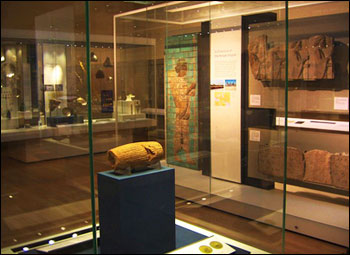
Edited: 15 March 2013
- Cyrus the Great human rights declaration
Edited: 15 March 2013